
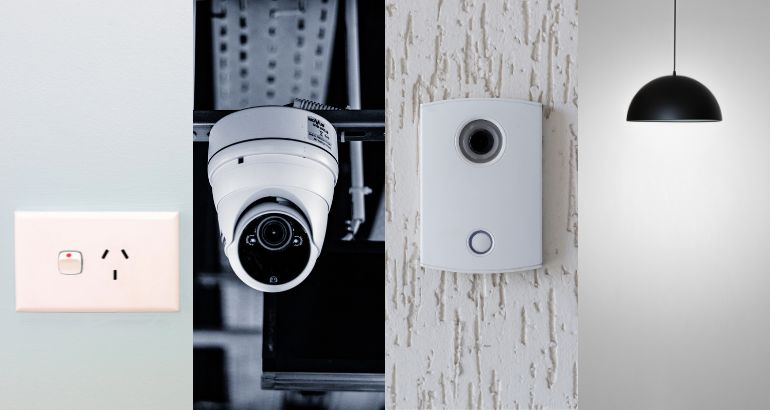
If you’re doing some DIY around the house, you may wonder where the line ends between what you can do yourself and when you need to call in a qualified tradesperson. If you’ve Googled it, you might find the answers a little muddled, especially with advice mixed in from other countries where the rules are different. We’ve put together a list of what you can install yourself versus what Australian electricians are required to do for you. Let us know if we’ve missed any!
A Quick Disclaimer Before You Read On
This guide is written for Queensland electrical situations; electrical rules can vary between states and territories, so always double check the specifics for where you live. The age of your home matters too. Older properties often don’t have safety switches (RCDs) on every circuit, which current standards require, so a job that’s straightforward in a newer home might turn up extra work in an older one. Older switchboards can also run into capacity issues once you start adding things like EV chargers, solar, or heat pumps, so a switchboard upgrade is sometimes part of the job. The right tradesperson can also depend on the appliance itself. Some jobs need an electrician while some need a different specialist (a plumber, a security licence holder, a cabler). Unlicensed electrical work isn’t just risky, it carries real fines in every state and territory, on top of the safety and insurance issues.
You can’t tell if something’s live just by looking at it, and switching it off at the wall doesn’t always mean the electricity’s off. An electrician has the tools and training to check properly before starting work.
When in doubt, talk to someone qualified for whatever you’re trying to install before the job starts, so you know exactly what’s involved.
Do I need an electrician to install downlights, chandeliers, or light fixtures?
Yes. In Australia, downlights, chandeliers, and other light fixtures must be installed by a licensed electrician. This work falls under the Electrical Safety Act 2002 (Qld), and attempting it yourself, or using someone who isn’t qualified, can lead to safety hazards, legal issues, and may even void your home insurance. Getting a professional ensures the job is done safely and correctly.
Do I need an electrician to install a ceiling fan?
Yes. Ceiling fans are hardwired into your home’s wiring, so a licensed electrician is needed by law. Beyond the electrical side, there are height and mounting considerations too. An incorrectly mounted fan can wobble or cause damage to your ceiling as it spins, so it’s a job best left to a licensed electrician.
Do I need an electrician to install an air conditioner?
No, not an electrician specifically, but you do need a qualified air conditioning installer, particularly for systems that are hardwired. There are actually two separate legal requirements involved. Anyone handling refrigerant, which includes installing or commissioning a split system, must hold a federal ARCtick Refrigerant Handling Licence. Separately, any fixed wiring still needs a licensed electrician. Some technicians hold both qualifications, but plenty don’t, so it’s worth checking that whoever you book covers both sides of the job rather than assuming it’s all included.
Do I need an electrician to install an oven, rangehood, induction hob, or stove?
Yes. Installing or uninstalling an oven, rangehood, induction hob, or stove requires a licensed electrician. These appliances are typically hardwired and involve high-voltage wiring, so a professional needs to check that the load is compatible with your home’s system and that everything complies with the Electrical Safety Act 2002 (Qld). The same goes for uninstalling: a qualified tradesperson needs to safely disconnect the appliance and make sure no live wires are left exposed.
Do I need an electrician to install a smoke alarm?
It depends on the type of alarm. Wireless battery-powered smoke alarms don’t require an electrician to install. However, any alarm that’s hardwired must be put in by a licensed electrician, who will issue a Certificate of Testing and Compliance under s227 of the Electrical Safety Regulation 2013 (Qld).
Regardless of alarm type, placement must comply with Queensland’s Fire and Emergency Services (Domestic Smoke Alarms) Amendment Act 2016, which requires photoelectric alarms in every bedroom, in hallways connecting bedrooms to the rest of the home, and on every level of the property. As of 1 January 2027, this will apply to every owner-occupied home in Queensland. Getting the locations wrong means the installation is non-compliant even if the alarms themselves are correct, and Queensland’s smoke alarm legislation carries real financial penalties for non-compliance.
It’s also worth knowing that if you ever need to make a fire-related insurance claim, your insurer may check whether your home met the legal smoke alarm requirements at the time. Non-compliance can affect whether a claim is paid out in full. For these reasons, most homeowners get a qualified tradesperson to handle the full job, so the compliance certificate holds up if it’s ever needed. You can find out more on the Queensland Fire Department website.
Do I need an electrician to install a generator?
Yes, if you want the generator to power your home. Connecting one to your property’s wiring legally requires a changeover switch fitted by a licensed electrician. Plugging a generator directly into your home is illegal and creates a serious risk of backfeeding, which can damage your property and the electrical grid, and put utility workers in danger. The changeover switch isolates your home from the grid while the generator is running, which is what makes it safe to use in the first place.
If you’re just using a generator to power something independent of your home’s wiring, such as a tool, an appliance, or an extension cord running directly off the generator, an electrician isn’t required for that. It’s only once you want it wired into your home’s circuits that a licensed electrician needs to step in and fit the changeover switch correctly. Wherever you’re using it, keep the generator running outdoors and well clear of doors and windows, since the exhaust produces carbon monoxide.
Do I need an electrician to install solar panels?
Yes. Installing solar panels requires a licensed electrician who is also a CEC Accredited Installer. Solar systems involve both DC (direct current) from the panels and AC (alternating current) for your home, with an inverter handling the conversion, and this work has to be done by someone with the right accreditation. Professional installation also matters for how efficiently your system performs, not just whether it’s safe, and it’s required to ensure your warranty is valid and to be eligible for solar incentives and feed-in tariffs.
This applies even for off-grid systems. Solar setups typically run at voltages high enough to cause serious electric shock or electrocution if a connection is made incorrectly, and a fault in the wiring can also start a fire. Lithium batteries, which are now standard in most solar storage systems, add another layer of risk. If they’re damaged, overcharged, or wired incorrectly, they can overheat and ignite. All solar installations need a licensed electrician, no exceptions, because a DIY mistake here can end in a serious injury or a house fire.
Do I need an electrician to install security cameras?
Not always; it depends on the setup. A single battery-operated camera can generally be installed yourself. For more extensive systems, particularly cameras that require electrical wiring, a licensed electrician is the right call. They’ll make sure wired systems are safely and correctly connected, and can advise on camera placement so you get full coverage of the areas that matter most, like entry points, driveways, and blind spots around the property.
Not every electrician has the qualifications to do security camera installations. In addition to an electrical licence, installing CCTV equipment requires a separate cabling registration through the Australian Communications and Media Authority (ACMA), as well as a state-based security licence. If your electrician doesn’t hold these, it’s worth asking before you book them in, or choosing a dedicated security camera installer instead. Insurers can reject claims for unlicensed work, and warranties may not be honoured either, so it pays to check before the job starts rather than after something goes wrong.
Getting placement right matters just as much as the wiring itself. A camera mounted in the wrong spot, at the wrong height, or facing the wrong direction can leave gaps in your coverage without you realising it until it’s too late. A professional installer will factor in things like lighting, angles, and Wi-Fi or cabling routes to make sure your whole system actually does its job.
Do I need an electrician to install an EV charger?
Yes. EV chargers that connect to your switchboard must be installed by a licensed electrician. They run on a dedicated circuit with its own circuit breaker and RCD protection, and your electrician will also need to check your switchboard has the capacity to handle the extra load, which sometimes means a switchboard upgrade is needed first. The good news is that unlike solar, EV charger installation doesn’t require any extra accreditation beyond a standard electrical licence, so any qualified electrician can take this one on. It’s still worth choosing someone with EV-specific experience, since they’ll be quicker at sizing the circuit and spotting any switchboard issues upfront.
Do I need an electrician to install power points?
Yes. In Australia, installing a new power point, moving an existing one, or replacing a power point is considered electrical work and must be done by a licensed electrician, even though it can look like a simple swap. The only part of the job you can safely do yourself is replacing a power point’s cover plate, since this doesn’t involve touching the wiring behind the wall. The moment you’re dealing with anything connected to your home’s circuits, it’s a licensed electrician’s job.
Do I need an electrician to install a heat pump hot water system?
It depends on the part of the job. Heat pump hot water systems, including popular brands like iStore, generally need both a licensed plumber and a licensed electrician. The plumber handles the water connections, the pressure relief valve, and the condensate drain, while the electrician connects the unit to a dedicated power supply with an isolating switch close to the unit. In some states, a compliance certificate from the plumber is also required once the job is done, particularly if you’re claiming a rebate. If you’re upgrading from an old electric or gas hot water system, it’s worth asking your installer upfront whether they coordinate both trades or whether you’ll need to book them separately.
Do I need an electrician to install a circuit breaker?
Yes. Installing a circuit breaker means working directly with your home’s switchboard, which is both complex and potentially dangerous. Under the Electrical Safety Act 2002 (Qld), it’s a job for a licensed electrician. A circuit breaker is a critical safety component, protecting your home from overcurrents and electrical fires, so incorrect installation can create serious hazards. A qualified tradesperson will make sure the right breaker is chosen for your home’s load and that it’s fitted correctly.
Do I need an electrician to install a dimmer switch?
Yes. It might seem like a simple swap, but installing a dimmer switch involves modifying your home’s wiring, so it needs to be done by a licensed electrician. They’ll check the dimmer is compatible with your lighting setup and make sure it’s safely and correctly wired in.
Do I need an electrician to install a bathroom exhaust fan?
Yes. Installing a bathroom exhaust fan means wiring it into your home’s electrical system, including any switches or timers, so it’s a job for a licensed electrician. Getting it wrong can lead to poor ventilation or electrical hazards, particularly given it’s going into a wet area.
Do I need an electrician to install a dishwasher?
It depends. Some dishwashers come with a plug and simply connect to an existing power outlet, in which case an electrician isn’t necessarily required, provided that outlet is on a circuit with RCD protection. Integrated or hardwired models, however, do need a licensed electrician. The same rule applies if any extra electrical work is needed, like a new outlet or changes to your home’s circuitry. Getting this part wrong isn’t just a safety issue either, it can also affect your home insurance if something goes wrong down the line.
Do I need an electrician to install a heated towel rail?
It depends on the type and your existing setup. Plug-in models can simply be connected to a suitable, safely located power outlet in your bathroom. Bathroom outlets near water sources have their own placement and weatherproofing rules, so an outlet that’s already there isn’t automatically suitable for a new appliance. If you don’t have an appropriate outlet, or you’re unsure whether an existing one meets the requirements, a licensed electrician can either install a new outlet safely or assess and modify your current setup to meet Australian standards. Hardwired towel rails always need one, full stop.
Do I need an electrician to install a thermostat?
Generally, yes, particularly for models that integrate with your home’s HVAC setup. A thermostat involves precise wiring to make sure it works correctly with your heating and cooling system, so it’s best handled by a licensed electrician. Some modern smart thermostats are marketed as easy to set up, but that usually refers to the app pairing and settings, not the wiring itself. It’s still worth checking with a licensed electrician before connecting anything to your system.
Do I need an electrician to install a garage door opener?
It depends on which part of the job you’re trying to get done. Hanging the door itself, and fitting tracks, springs, and hardware, is generally handled by a garage door specialist rather than an electrician. There are dedicated companies for this, and many are affiliated with the Australian Garage Door Association. If the opener is a plug-in model and a suitable power outlet already exists in your garage, a garage door specialist can usually handle the whole job without an electrician needing to be involved at all.
The electrical side is different. Connecting the opener to mains power must be done by a licensed electrician, who will issue a Certificate of Compliance for Electrical Work once it’s done. If you’re fitting a new opener and there isn’t already a suitable power outlet nearby, you’ll need an electrician to install one. Some jobs end up needing both a garage door specialist and an electrician, depending on what your garage already has in place.
Do I need an electrician to install a ring doorbell?
It depends on the model. Battery-operated ring doorbells are designed for DIY installation and don’t require an electrician. If you’re replacing an old wired doorbell with a wired ring model, there’s more to it than just the power connection, since it also needs to integrate properly with your home network or existing doorbell wiring to work correctly. For that reason, it’s a good idea to use a licensed electrician to make sure it’s installed safely and set up correctly from the start.
Do I need an electrician to install a hot tub?
Yes. Hot tubs have high power requirements and involve serious electrical work, including proper grounding and safety measures, which matters even more given the combination of water and electricity. There are also clearance rules for where switches, outlets, and any other electrical equipment can sit relative to the water, similar to the zone rules that apply around pools. A licensed electrician needs to manage the power supply, fit the right circuit breaker, and make sure every component is safely connected and positioned correctly. Getting this right isn’t just about safety either, it also affects how reliably and efficiently the hot tub runs day to day.
Do I need an electrician to install an inground or above-ground pool?
Yes, for any electrical components. Pools typically need electrical work for pumps, lighting, heating, and other accessories, and all of it has to be handled by a licensed electrician, including proper grounding and bonding to prevent hazards. Given the serious risks of electricity near water, this isn’t one to DIY. A good electrician can also advise on energy-efficient options for pumps and heating, so it’s worth bringing them in early rather than treating it as a box to tick at the end.
Do I need an electrician to install a garbage disposal?
Yes, for the electrical parts. In most cases, both a plumber and an electrician are involved. The plumber handles the connection to your sink and drainage system, making sure the water side is sealed and draining properly, while a licensed electrician takes care of any hardwiring or new power outlet the unit needs. Using both means you’re covered on both fronts, rather than ending up with a unit that’s plumbed in correctly but wired in a way that doesn’t meet Australian electrical standards, or vice versa.
Do I need an electrician to install a phone line or NBN internet cable?
No, this can’t be done by an electrician; you’ll need a licensed cabler. Telecommunications cabling is a separate field, and installation must comply with Australian Communications and Media Authority (ACMA) regulations. A licensed cabler has the training and accreditation to handle phone line and NBN installations correctly and ensure your connection performs reliably.
Looking for the Right Person for the Job?
Whether it’s a single power point or a full EV charger and switchboard upgrade, our team can help with nearly everything on this list. Get in touch and we’ll let you know exactly what’s involved, what it’ll cost, and how soon we can get it sorted.